
One of my favorite movies within the Star Wars movie franchise is Rogue One, the prequel to the very first movie (known originally simply as Star Wars but now called Episode IV: A New Hope).

But I always thought there was a fundamental flaw in the plotline of Rogue One when the two main characters Jyn Erso and Cassian Andor (played by Felicity Jones and Diego Luna) are forced to climb a physical tower to retrieve a physical memory unit, like a hard drive, containing the plans to the Death Star.
In such an advanced technological universe as Star Wars, why were the Death Star plans sitting on a single isolated hard drive, stored away like a file in a filing cabinet? Why weren’t they encrypted and stored in bits and pieces across the cloud? In fact, among all the technological wonders of the Star Wars universe, the cloud and the internet are conspicuously absent. Why?
After the Microsoft IT crash of July 19, 2024, I think I know the answer: Because the internet and the cloud and computer operating systems are so fundamentally and hopelessly flawed that any advanced civilization would have dispensed with them eons ago.
Information Technology (IT)
I used to love buying a new computer. It was a joy to boot up for the first time, like getting a new toy. But those days may be over.
Now, when I buy a new computer through my university, the IT staff won’t deliver it until they have installed several layers of control systems overlayed on top of the OS. And then all the problems start … incompatibilities, conflicts, permissions denied, failed software installation, failed VPN connections, unrecognized IP addresses, and on and on.
The problem, of course, is computer security. There are so many IT hack attacks through so many different avenues that multiple layers of protection are needed to keep attackers out of the university network and off its computers.
But the security overhead is getting so burdensome, causing so many problems, that the dream from decades ago that the computer era would save all of us so much time has now become a nightmare as we spend hours per day just doing battle with IT issues. More and more of our time is sucked into the IT black hole.
The Microsoft IT Crash of July 19, 2024
On Friday the 19th, we were in New York City, scheduled to fly out of Newark Airport around 2pm to return to Indianapolis. We knew we were in trouble when we looked at the news on Friday morning. The top story was about an IT crash of Microsoft operating systems controlling airlines, banks and healthcare systems.
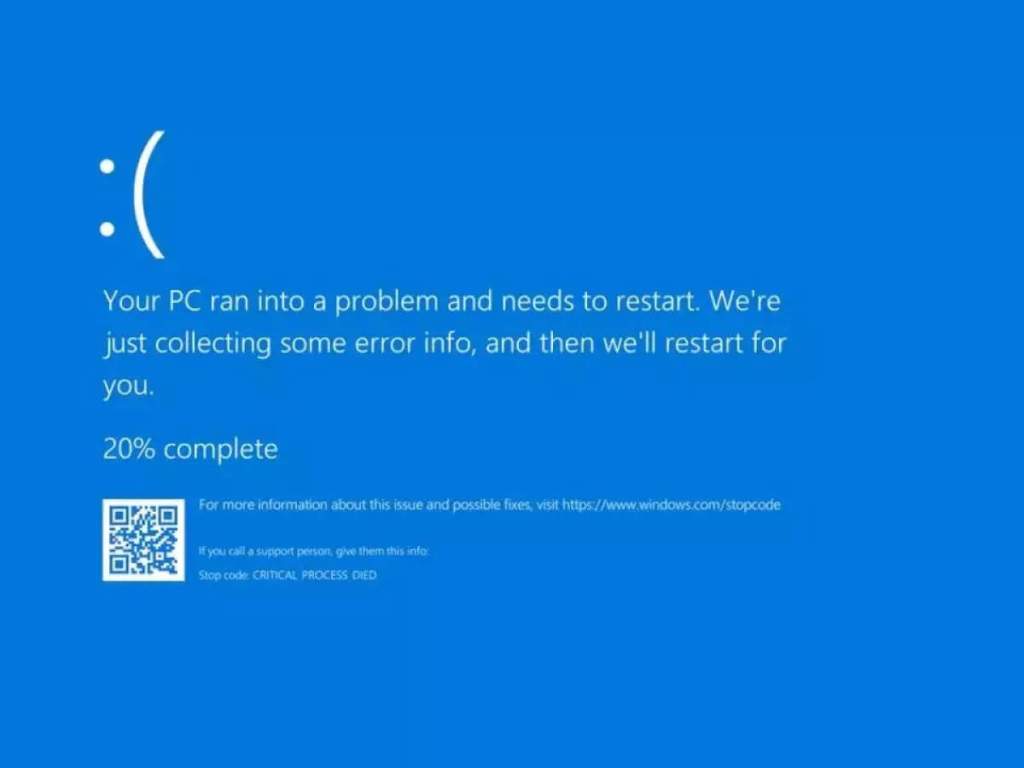
At Newark airport, we were greeted by the Blue Screen of Death (BSoD) on all the displays that should have been telling us about flight information. Our United apps still worked on our iPhones, but our flight to Indy had been cancelled. We took an option for a later flight and went to the United Club with two valid tickets and a lot of time to kill, but they wouldn’t let us in because their reader had crashed too.
So we went to get pot stickers for lunch. Our push notifications had been turned on, but we never received the alert that our second flight had been cancelled because the push notifications weren’t going out. By the time we realized we had no flight, United had rebooked us on a flight 2 days later.
Not wanting to hang around the Newark airport for 2 days, we went online to rent a car to drive the 16 hours back to Indy, but all the cars were sold out. In a last desperate act, we went onto Expedia and found an available car from Thrifty Car Rental—likely the very last one at the Newark airport.
So, on the road by 4pm we had 16 hours ahead of us before getting back home. The cost out of pocket (even after subtracting the $400 refund from United on our return flight) was $700 … all because of one line of code in a Microsoft update. The total estimated cost of that error worldwide is anticipated to exceed $1B.
A House of Cards
The IT era began around 1980, about 45 years ago, when IBM launched its PC. Operating systems were amazingly simplistic at that time, but slowly over the decades they grew into behemoths, add-ons adding to add-ons, cobbled together as if with chewing gum and baling wire. Now they consist of millions of lines of code, patches on patches seeking to fix incompatibilities that create more incompatibilities in the process.
IT is a house of cards that takes only one bad line of code to bring the whole thing crashing down across the world. This is particularly worrisome given the Axis of Chaos that resents seeing the free world enjoying its freedoms. It’s an easy target.
But it doesn’t have to be this way. It’s not unlike the early industrial revolution of steam power when every engine was different, or transportation when there were multiple railroad wheel widths, or electrification when AC did battle with DC, or telecommunications when different types of MUX on fiber-optic cables were incompatible. This always happens when there is a revolution in technology that develops rapidly.
What is needed is a restart, to scrap the entire system and start from scratch. Computer Scientists know how to build an efficient and resilient network from the ground up, with certification processes to remove the anonymity that enables cyber criminals to masquerade as legitimate operators.
But to do this requires a financial incentive. The cost would be huge because the current system is so delocalized as every laptop or smart pad becomes a node in the network. The Infrastructure Bill could still make this goal its target. That would be revolutionary and enabling (like the Eisenhower Interstate System was in the 1950’s which transformed American society), instead of spending a trillion dollars to fill in potholes across a neglected infrastructure.
It may seem to be too late to start over, but a few more IT crashes like last Friday may make it mandatory. Wouldn’t it be better to start now?
 Galileo Unbound