What is the point of education? Why do we learn facts we never use in our jobs? Why do we worry over tiny details in arcane classes that have no utility? Isn’t it all a waste of time?
Let me ask it a different way. Why not train for a specific job? Can’t we jettison all those irrelevant facts and details and just spend our time on the activities we will be performing when we are employed? Why bother with education in the first place? Why not just get on with the job?
The answer is simple: To adapt and to survive. Or even more simply: To live and to live well—which is the function of reason.
With a broad education, we learn how to learn, and we learn how to think. We learn how to adapt, to be agile, to think differently. We learn to recognize approaching pitfalls and opportunities. We learn not to be afraid of the unknown. We learn to be savvy and to know what’s what.
The world is changing faster and faster, and the worst thing we can do now is to stand still, hunkering down in our fox holes, waiting in vain for a lull in the barrage. The lull never comes. To live and to live well, we need the tools to shift, to pivot, to ride the wave of the new.
That is what education allows us to do.
But even that is not enough. We need to keep learning as the world changes. Education never ends, and that is why we need the Public Broadcasting Service (PBS) and National Public Radio (NPR).
These services are the fastest and easiest and cheapest ways to keep learning, to continue our education. They expose us to the latest developments on topics, and in areas, we would never seek out for ourselves. The volume and the value and the treasures and the tools they teach us are priceless. They are our lifelines as we struggle not to go under as the waves of change crash down upon us.
Some of the topics suck. No doubt. And the news trends woke. Clearly. There are times when I regretted watching a disturbing PBS segment, and other times when I rushed to the radio to turn NPR off. And that is the point—I am free to turn it off. But it is still there when I choose to turn it on again.
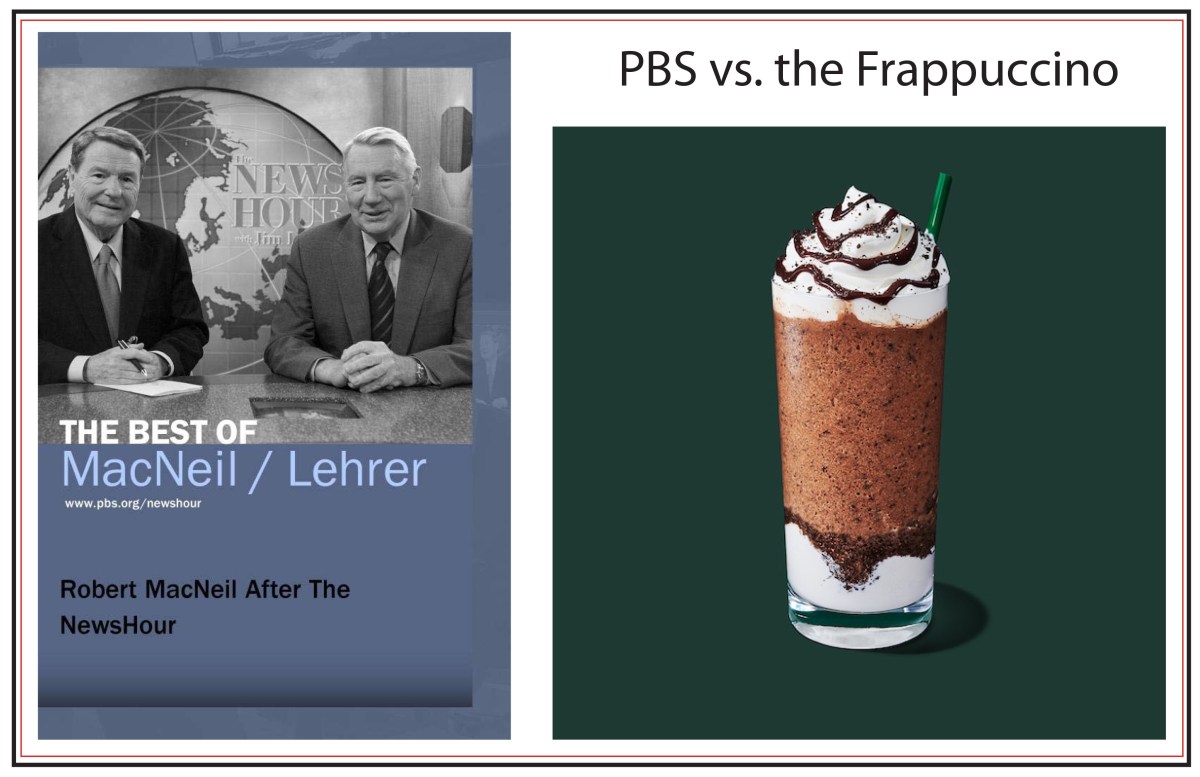
Governments have the responsibility to help their citizens live and to live well. Continuing education is one simple and cheap way to do that. The $1B that was cut by Congress yesterday from current funding of PBS and NPR costs about $7 per year per taxpayer. That is a single Vente Mocha Frappuccino at Starbucks in one year.
Wouldn’t you give away one Vente Mocha Frappuccino per year just to have the option to turn on PBS or NPR? You don’t even need to do it — just to have the option to? And you might even lose weight in the process.
 Galileo Unbound