
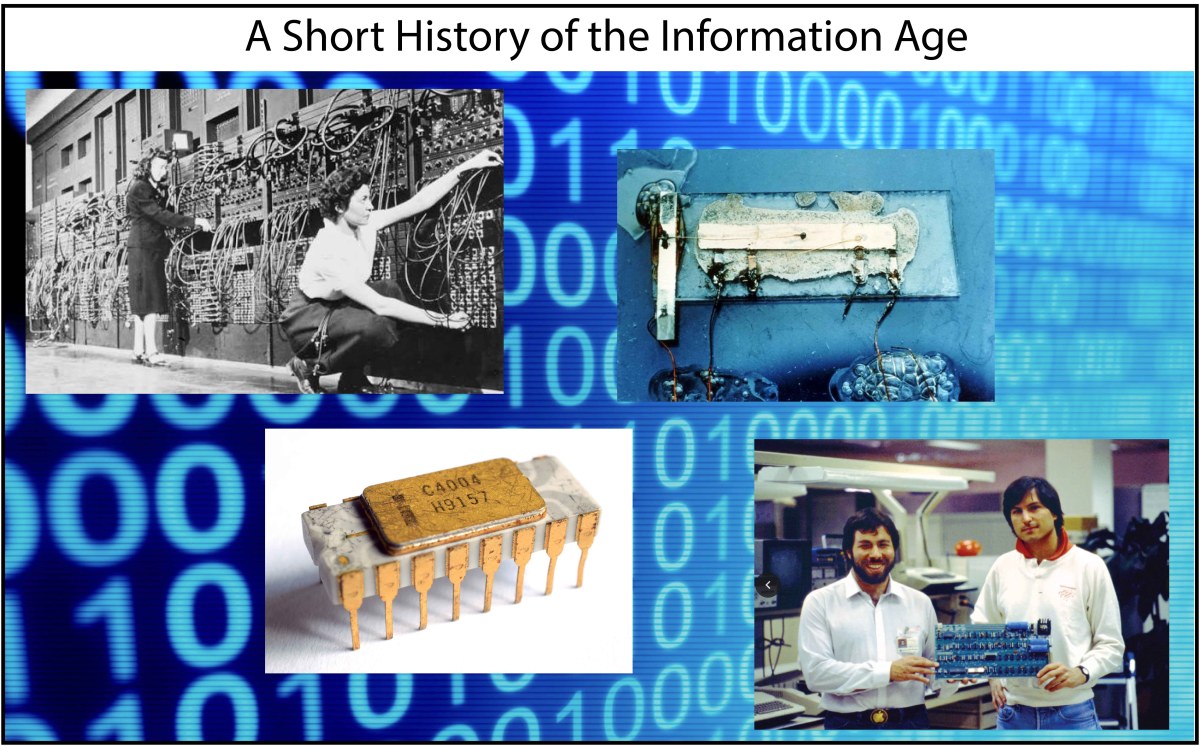
We are immersed in information, bathed in bits.
Information surrounds us, informs us, guides us, protects us. Without it, life could not exist. Without it, the universe could not exist—because the universe might very well be information
Despite the ubiquity of information, the Information Age, as we call it, is quite young, only about 80 years old. Everyone alive today has spent most, or all, of their lives watching it unfold. Only octogenarians or older have any hope of remembering what life was like before the revolution.
The Information Age is defined by the dominance of digital information across society, economics and culture. Information in a more raw form has been guiding human society ever since the invention of language about 500,000 years ago. The invention of writing gave it a material boost 5000 years ago, and Gutenberg accelerated the process 500 years ago. But the threshold to the Information Age was crossed in 1945 with the invention of the ENIAC, the first digital computer. From that moment, the analog world began to slip away, replaced by bits. The global amount of stored digital information surpassed analog storage (books, phonographs, photographs, audio tapes) in 2002.
It may be too early today to gain the distance needed for a frank assessment, but the first 40 years were the real go-go years, when most of the underlying technology was invented. Here is a short history of those first forty years of the Information Age, beginning with ENIAC in 1945 through the invention of the World Wide Web in 1989.
The ENIAC, University of Pennsylvania (1945)
The Information Age and the Computer Age are nearly synonymous. The chief function of information is control, and the chief mechanism by which one stream of information controls another is in a computer.
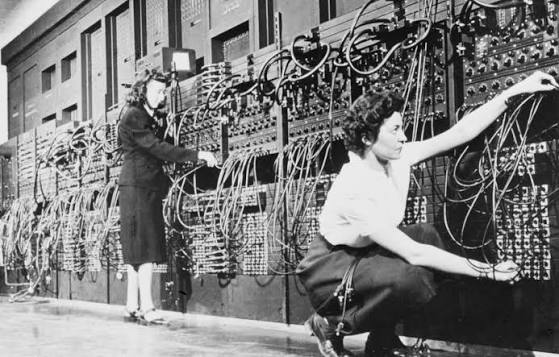
The first fully functional electronic computer was the ENIAC built at the University of Pennsylvania in 1945 by physicist John Mauchly and engineer J. Eckert in collaboration with John von Neumann. The three invented the stored-program architecture that consisted of a central processing unit (CPU), a memory and input/output ports. It weighed 27 tons and consumed 150 kWatts of electricity, but it was 10 times faster than mechanical calculators.
The Transistor, Bell Labs (1947)
In the years from WWII to the notorious breakup of AT&T by federal district court judge Harold Green in 1984, Bell Labs was the apex R&D lab in the world. Even in 1988, when I arrived at Holmdel, NJ, to begin my post-doc position with Alastair Glass in the Optical Materials Department, it still retained the glow of its halcyon days. Nothing was impossible, and research ran at a furious pace.
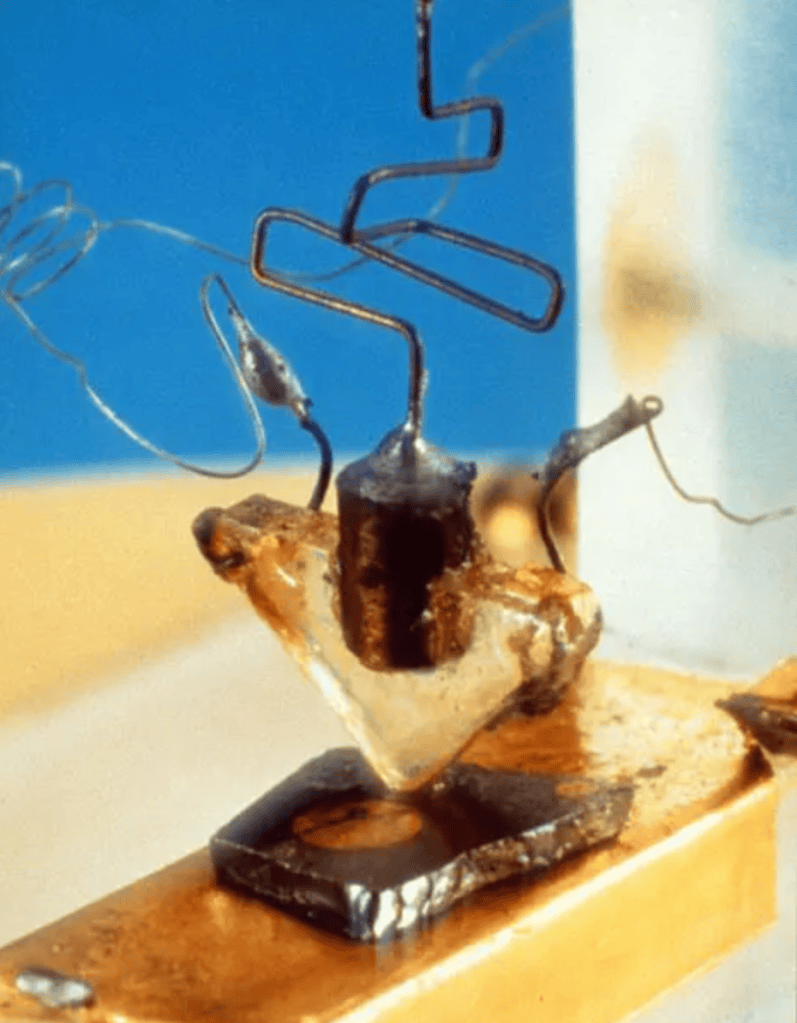
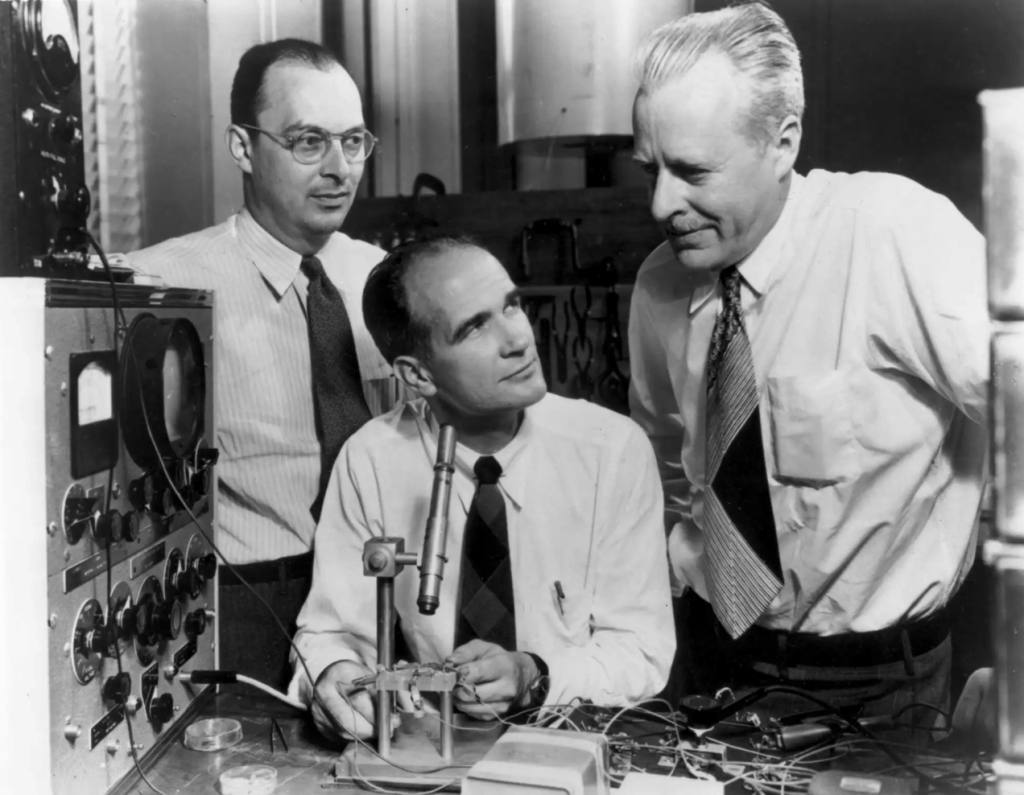
The accelerating use of electronics during WWII had led to an intense research program to replace large, expensive, over-heating vacuum tubes with a compact solid-state device. At Bell Labs, John Bardeen, Walter Brattain and William Shockley succeeded in controlling a current with a voltage in a transistor constructed of germanium in 1947. The germanium was soon replaced by silicon that had superior properties, especially its oxide properties that enabled the operation of field effect transistors (FETs).
Information Theory, Bell Labs (1948)
The Information Age would not be a recognized technological age of modern society without a theory to go with it. This was provided by Claude Shannon of Bell Labs in 1948, who recognized that information was related to a concept that Ludwig Boltzmann had derived 70 years earlier—Entropy. The equation chiseled into stone on Boltzmann’s memorial in Vienna, Austria, states simply that entropy is proportional to the logarithm of the probability of states.
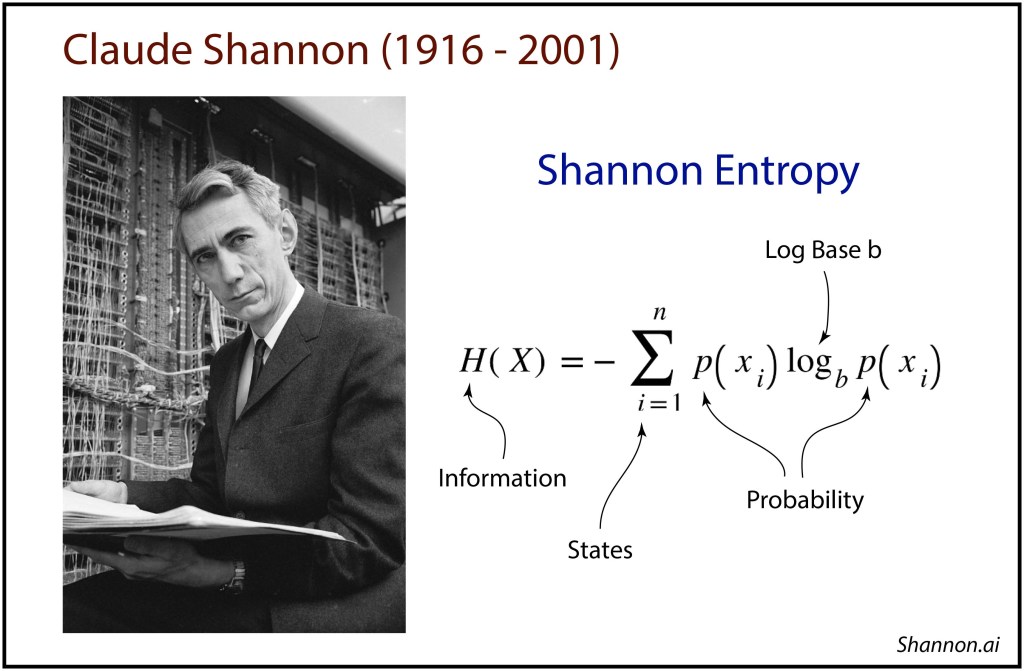
Shannon showed that information is a measure of “surprise”, meaning that is it the likelihood of observing something unexpected. If there is no surprise in a message, like a string of ones “1111111 ..”, then the message carries no information. It is only when the message is structured “1011000110010101” that it carries information to distinguish one bit from the next. Information is greatest when the surprise is greatest, which is also the highest entropy.
This concept of information is un-intuitive, but it ends up explaining almost every aspect of the flow of information through any dynamical or complex system. Physicists like John Wheeler of Princeton and Seth Lloyd of MIT went so far as to claim that the physics of reality is in reality the physics of information.
Magnetic Hard Disk Drive, IBM (1953)
When I first learned to run computer programs on a mainframe computer at Cornell University in 1978, the first step in the process was converting my computer code into punched IBM cards that were fed into a mechanical reader. Even then, it was a hold-over from a by-gone age when all computer memory was mechanical, either in the form of punched cards or magnetic tape.
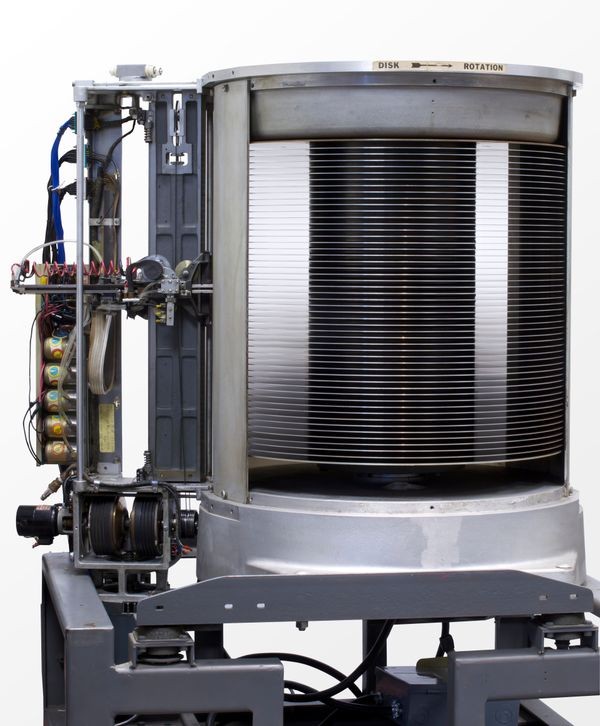
That all changed with the IBM 350 Disk Storage Unit that used spinning magnetic disks and a read head that floated on a cushion of air just a few mils above the disk surface. This was the first commercial hard drive, invented at the IBM San Jose research facility in 1953 by Reynold Johnson, a former high-school teacher who had a knack for invention. The key feature of the hard drive was its ability to provide random-access to stored information. The unit was bigger than a refrigerator and weighed a ton while only having a storage capacity of 5 MB. But the tech has scaled well, and today 8 TB hard drives the size of a pocket book are commonplace.
Integrated Circuit, Texas Instruments (1958)
The invention of the integrated circuit was a pivotal moment that launched electronic miniaturization, ushering in increasingly complex function into increasingly smaller packages. The miniaturization trend has been going strong for 60 years and continues today.
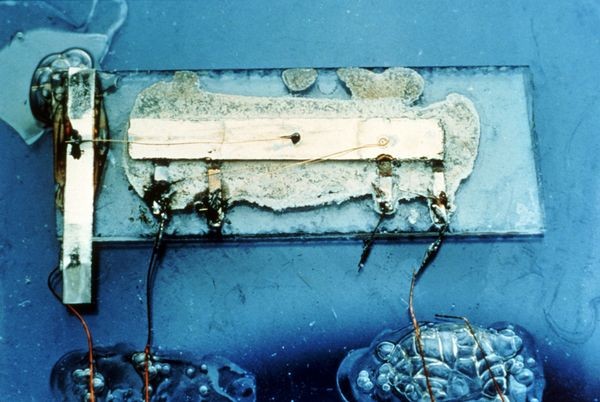
The integrated circuit solved the problem of spaghetti wiring needed to wire transistors together with capacitors and resistors on circuit boards. By integrating the construction of wires, transistors, capacitors and resistors onto a semiconductor chip, all the mess is removed and each of the elements can be reduced in size.
The integrated circuit was invented by Jack Kilby of Texas Instruments. Shortly after joining the company, he was stranded while others were away on vacation (he had not accrued any vacation time yet), so he thought of the idea of integrating the different circuit elements onto a single chip. He built the first demo out of a chip of germanium.
The Laser, Hughes Research Lab (1960)
Ted Maiman, the inventor of the laser, was a wanderer. When given the opportunity to work with a Nobel prize winner at Stanford, he instead used his life savings to take a trip around the world. Settling back into research life after his trip, he got a job at Hughes Research Lab, the research arm of the Hughes Corporation founded by the eccentric Howard Hughes.
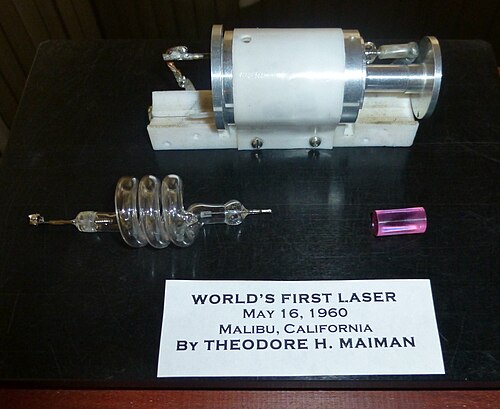
His first job at the lab was to improve on the ruby maser (micro-wave amplification by stimulated emission) but he wandered off track and began pursuing light emission—the so-called optical maser. The common wisdom was that ruby would not lase, and Ali Javan at Bell Labs was close to completing the first HeNe laser. Yet Maiman tried anyway by wrapping an intense flash tube around a rod of ruby with polished mirror faces. On May16, 1960, he and his technician, Irnee D’Haenens, slowly increased the voltage to the flash tube until the room suddenly glowed red when the rod emitted red laser radiation. D’Haenens was color blind and could not normally see red, but the laser light was so bright that even the few red receptors in his eyes picked up the light. He saw the color red for the first time in his life! (Read more about the discovery of the laser in Chapter 8 of Interference (Oxford University Press (2023)).
T-Carrier, Bell Labs (1962)
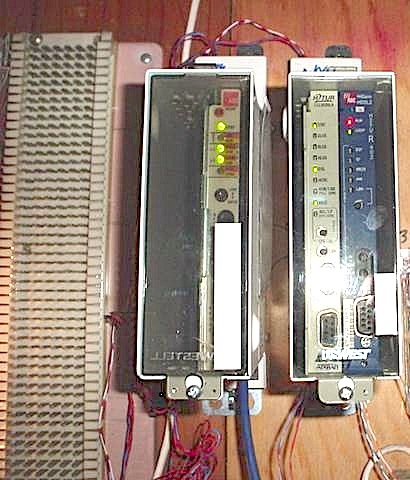
Information does little good if it cannot be transmitted from place to place. In 1962, engineers at Bell Labs introduced the T-carrier, a method to transmit digital information over simple twisted-pair copper wires. The master stroke of this invention is that it took the standard wire that was designed for a single analog phone conversation and sent 24 simultaneous conversations in digital form down the same wire. By the early 1960’s the US had nearly 400 million miles of twisted pair laid down that would have cost a fortune to replace, but the Bell engineers “repurposed” it, extending the capacity by multiplexing, eventually pushing the multiplex level up to 96 simultaneous conversations. One of the engineers responsible for this technological advance was John Mayo, who became the seventh president of Bell Labs in 1991.
Moore’s Law, Fairchild Semiconductor (1965)
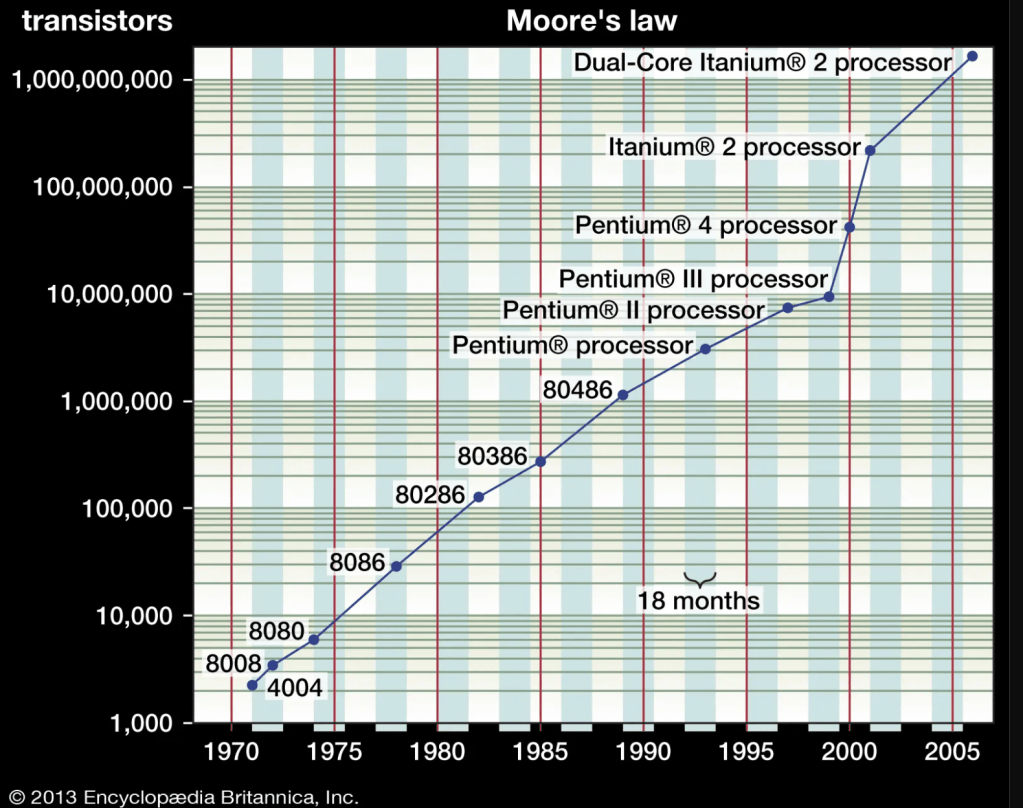
In 1965 Gordon Moore, the director of research at Fairchild Semiconductor in San Jose, California, was asked to contribute a short opinion piece to a special issue of an electronics magazine. In the article he noted that the complexity of integrated silicon circuits was doubling about every year, and he projected that the trend would continue for the next ten years. He revisited his prediction in 1975, noting that the trend would likely continue until 1980, after which it would adjust to a doubling every two years into the foreseeable future. His prediction was essentially correct, and “Moore’s Law” has been on track for over half a century. Numerous other technologies are now following their own form of Moore’s Law.
Fiber Optics, Standard Communications Laboratory, UK (1966)
In the early days of fiber optic research, shortly after 1960, scientists could not send light a hundred meters without losing nearly all of the intensity. The first breakthrough came in 1966 with the suggestion by Charles Kao, working a the Standard Communications Laboratory in England that a light-guiding core of high-density glass could be surrounded with an outer cladding of lower density glass. The lower-density cladding still allowed total internal reflection, while shielding the guided light from the rough surface of the fiber. This clad fiber solved one of the impediments to getting light to travel long distances, but there was still the problem of absorption by impurities in glass.
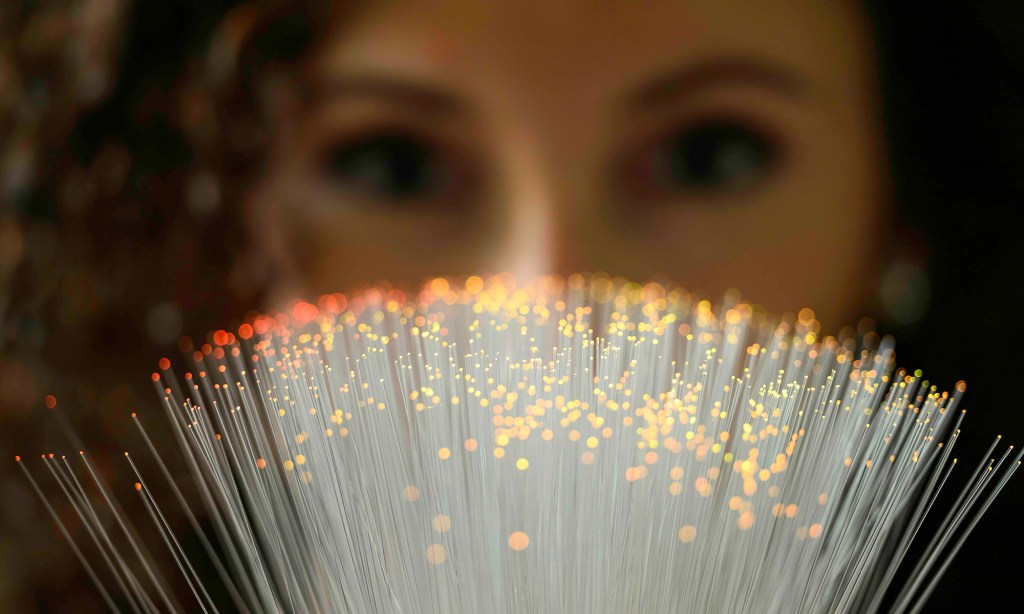
The second breakthrough came in 1970 when researchers at Corning Glass showed that, by using a special fabrication technique called chemical vapor deposition (CVD), the fibers could be made so pure that the absorption was minimized. They showed that light intensity in the fiber would drop only 99 percent over one kilometer. Though this sounds like a big drop in intensity, it was a critical threshold toward which everyone had been working. With this degree of transparency, a fiber system could have a repeater (a photodetector that receives the signal, and a laser that relaunches it down the next segment of fiber) spaced as far as 1 – 2 km apart. This was a magic number because it was the same repeat distance that was being used by electronic transmission. If it was good enough for telephone wires, it should be good enough for fibers. (Read more about the discovery of fiber optics in Chapter 6 of Mind at Light Speed (Free Press (2001))
SRAM Memory, RCA Laboratories (1968)
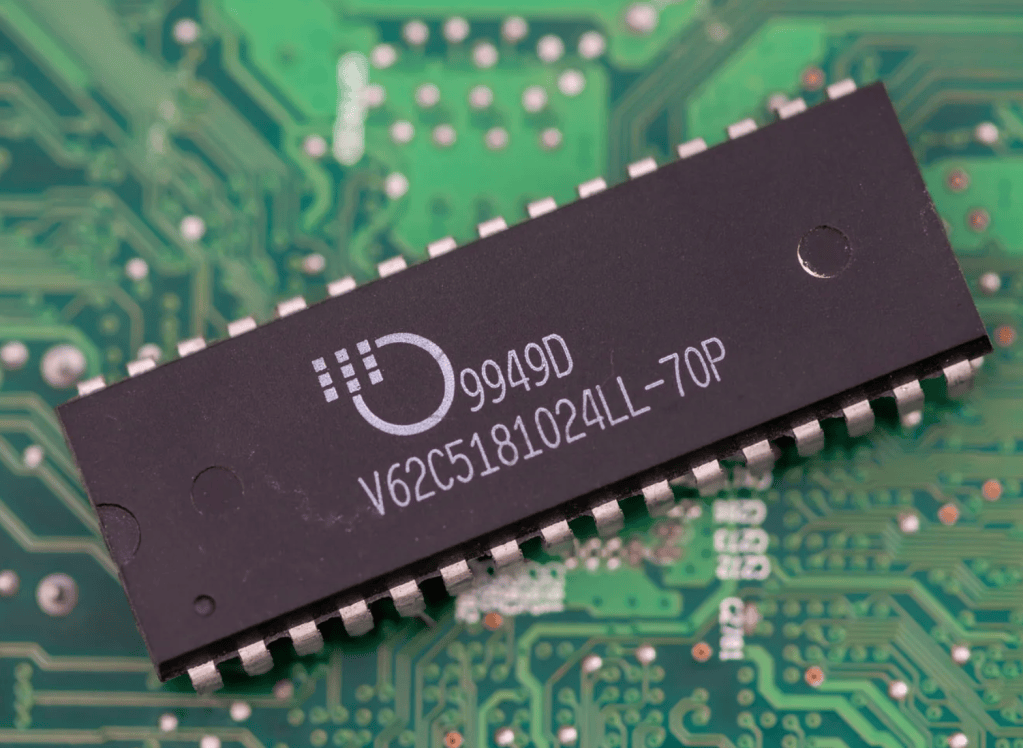
Core computer memory prior to 1965 was based on small magnetic ferrite rings threaded by small wires. The devices were large and slow (by modern standards) and maxed out at about 8 MB. Static Random Access Memory (SRAM) circuits would eventually replace core memory, but they had a modest start. CMOS technology was invented at Fairchild Semiconductor in 1965 and was rapidly developed into TTL circuits as well as static RAM, but the capacity was initially only 288 bits. RCA Laboratories integrated the CMOS into circuits that provided a long runway for scaling. Today SRAM chips easily hold 64 MB of information while SRAM in CPU cores reach several GB.
CCD, Bell Labs (1969)
Light is one of the most ubiquitous and most information-rich probes of the world around us. Although light moves in three dimensions, a two-dimensional cross section of light paths captures the essential information content. Therefore, cameras are the quintessential collectors of information carried by light, and digital cameras are the front end to any downstream image processing using computers and telecommunications.
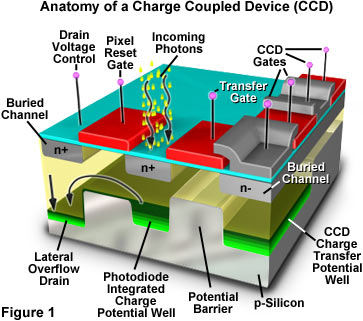
The charge-coupled device (CCD) was the breakthrough digital imaging technology of the Information Age, launching the revolution in commercial, industrial, scientific and personal imaging. The CCD was invented at Bell Labs in 1969 by George Smith and Willard Boyle (who received the Nobel Prize in Physics for the invention in 2009) when they realized that MOS technology in silicon could transfer “buckets” (they called them “bubbles’) of electrons from one capacitor to an adjacent one on the chip, creating a “bucket brigade” of electrons along linear chains of capacitors. The application of CCD technology specifically for imaging was demonstrate the next year in 1970.
Compact Disc, Pillips Corp. (1969)
The wavelength of light is about one micron (a millionth of a meter), so the storage of information on an optical disk has an ultra-high density of about 1 bit per square micron. The first technology to try to access this data density was the compact disk of Klaas Compaan and later Kees Immink at Phillips Corporation. CDs eventually reached a storage of 700 MB of data. They were cheap to manufacture (pennies per disk) and easy to distribute (jewel cases) and replaced previous magnetic tape as the chief storage medium for music. This was followed by DVDs with 5 GB for movies and later BluRay (shorter wavelength and multiple layers) in the early 2000’s with a storage of 25 GB of data.
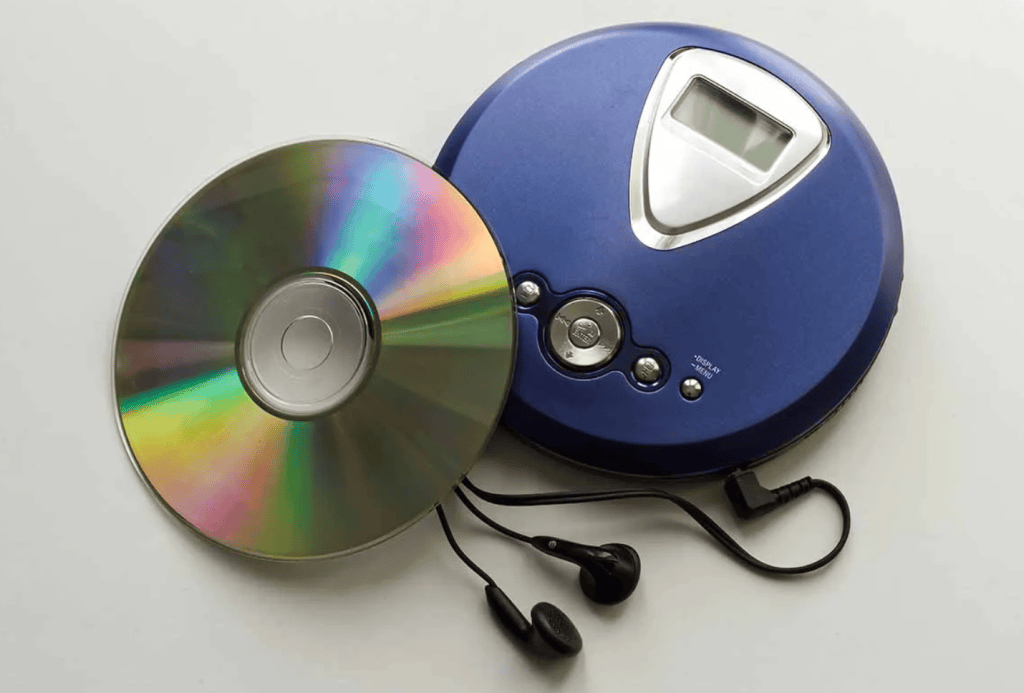
(As a personal aside, in the late 90’s, Marty Becker, a colleague of mine at Purdue, came into my office one day and asked my why CD’s reflected rainbow colors. I didn’t know, but when I looked into it, I was amazed to find that the surface of a CD consisted of a billion little pits that each were a tiny optical interferometer. (Optical interferometers are the most sensitive measurement system mankind has ever devised, capable of detecting the merger of two black holes from half a universe away.). This had been the brainchild of Klass Compaan and Piet Kramer of the Phillips Corporation in the Netherlands.
About a year after I had talked with Marty, I was asked by Fred Regnier, another colleague at Purdue, how a physicist might measure thousands of different proteins to help the new field of proteomics. I immediately thought of Compaan’s billion little interferometers and suggested that the little pits could be used like a billion little test tubes and use light to measure the protein reactions. This was the origin of the BioCD, which went on to commercial success in the canine blood diagnostics market between 2010 and 2020.)
Intel 4004, Intel (1971)
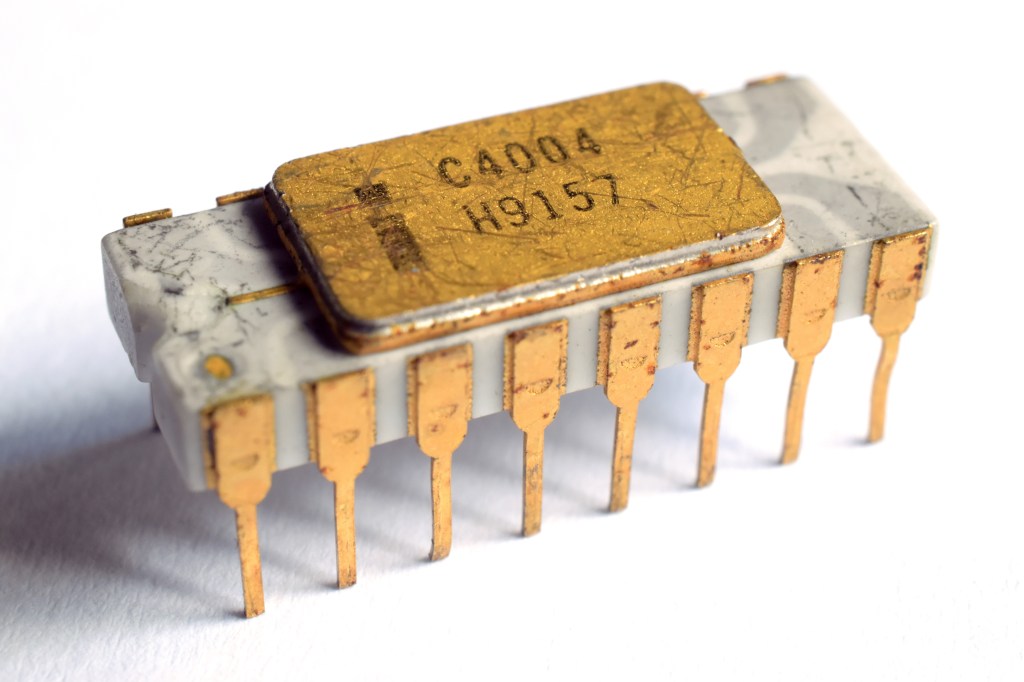
Transistors had already revolutionized circuit board electronics, but these were still bulky and expensive to fabricate. A major technological breakthrough came with the integration of multiple transistors on a chip, and multiple chips in a package, creating significant computing power in the size of about 1 centimeter. This was achieved by Intel with the release of the Intel 4004 microprocessor in 1971. The fabrication was intrinsically scalable, putting successively more transistors onto chips, driving Moore’s Law for many decades.
Altair 8800, MITS (1975)
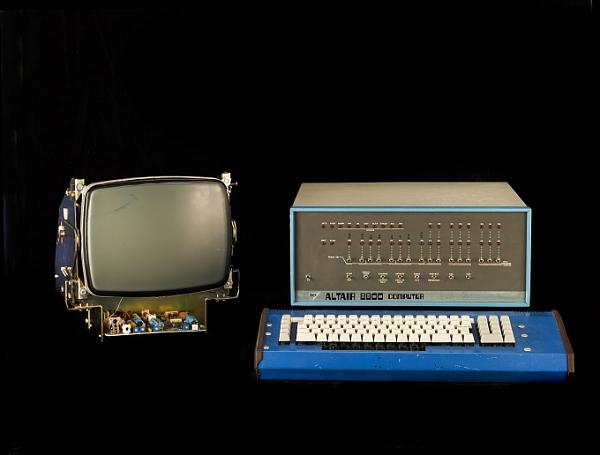
By combining microprocessor chips with memory and a user interface, the first personal computers came out as DIY electronics kits. The first was the Altair 8800 released by MITS in 1975 as a hobbyist kit used for the first rudimentary computer games.
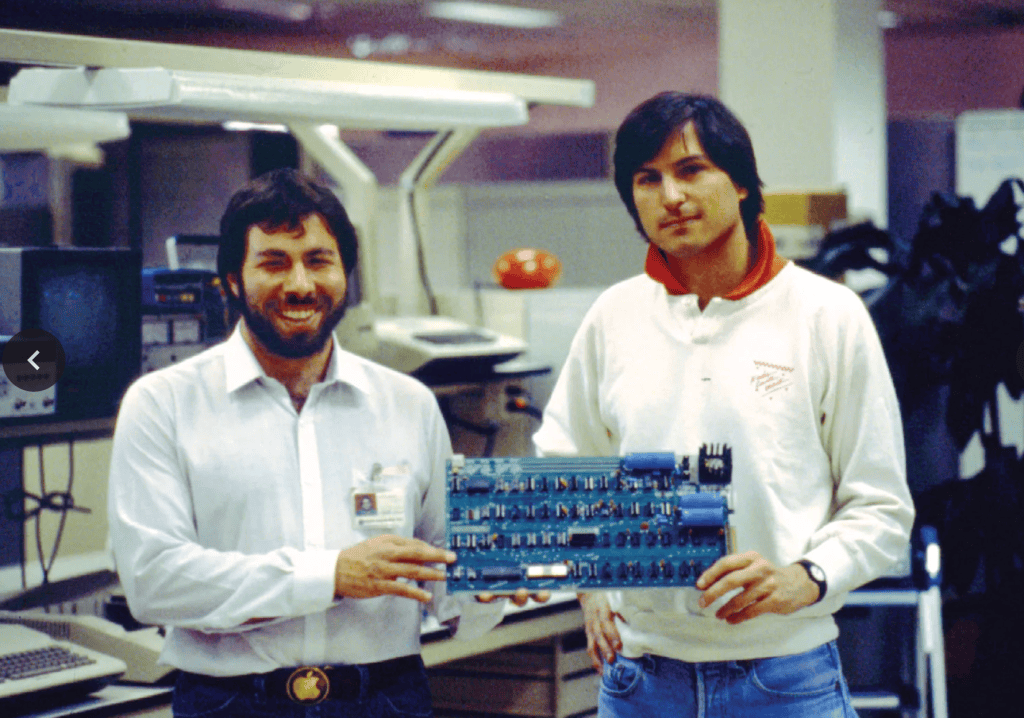
Apple II, Apple Corporation (1977)
Kits are fine for hobbyists, but personal computers could not penetrate mass markets until they became “appliances”. This was achieved by Steve Wozniak and Steve Jobs at Apple in 1977 with the release of the Apple II that came with the VisiCalc program, the first spread-sheet application that saw widespread utility, known as a “killer app”. The Commodore 64 microcomputer and the RadioShack TRS-80 were also early entries into the personal computer market.
Cell Phone, Motorola (1983)
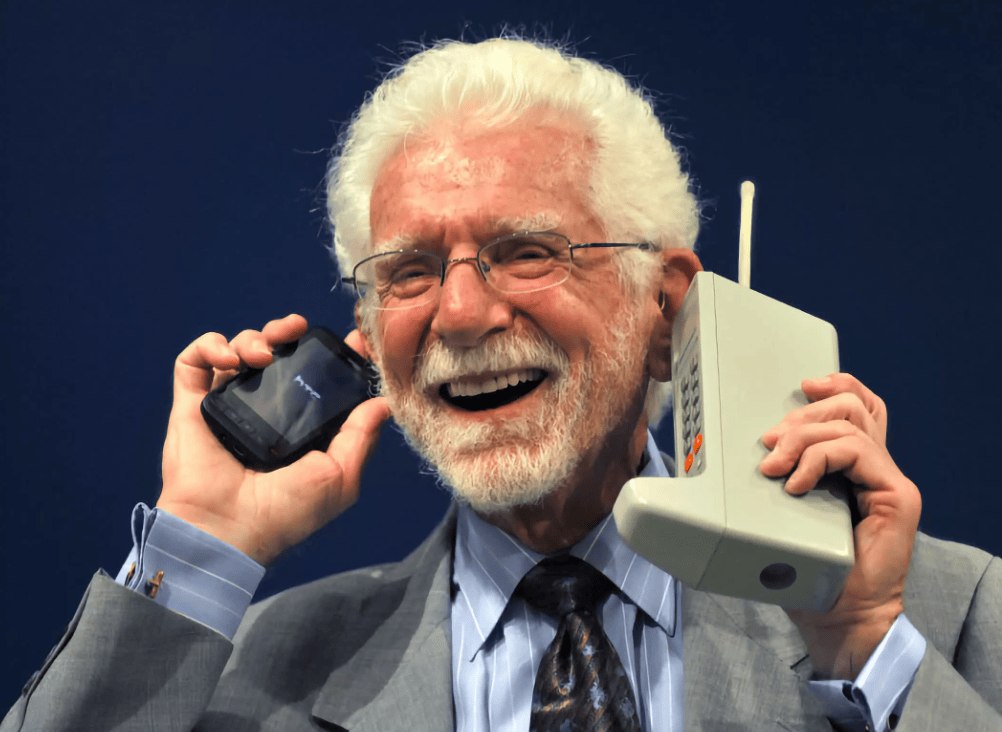
The invention of the cell phone affected everyone by ushering in 24-7 with a vengeance. With the cell phone, no one is ever unavailable or out of touch or lost. It connected individuals into dense human networks.
The first cell phone call was made in 1973 by Martin Cooper of Motorola to his competitor at AT&T. It took another 10 years to settle all the regulatory issues and to build the first cell network before the Motorola DynaTAC 8000X was released to the public in 1983 operating on an AT&T network.
Handwriting Recognition, Bell Labs (1988)
When I joined Bell Labs in 1988, new employees were treated to a grand introduction to Bell Labs research by the president Arno Penzius, who had won the Nobel Prize in physics in 1978 for discovering the microwave background of the Big Bang. We also were given tours of select labs where significant advances were being made. One lab I visited was the handwriting recognition lab at Holmdel, NJ, where Yann LeCun was revolutionizing the recognition of handwritten numbers.
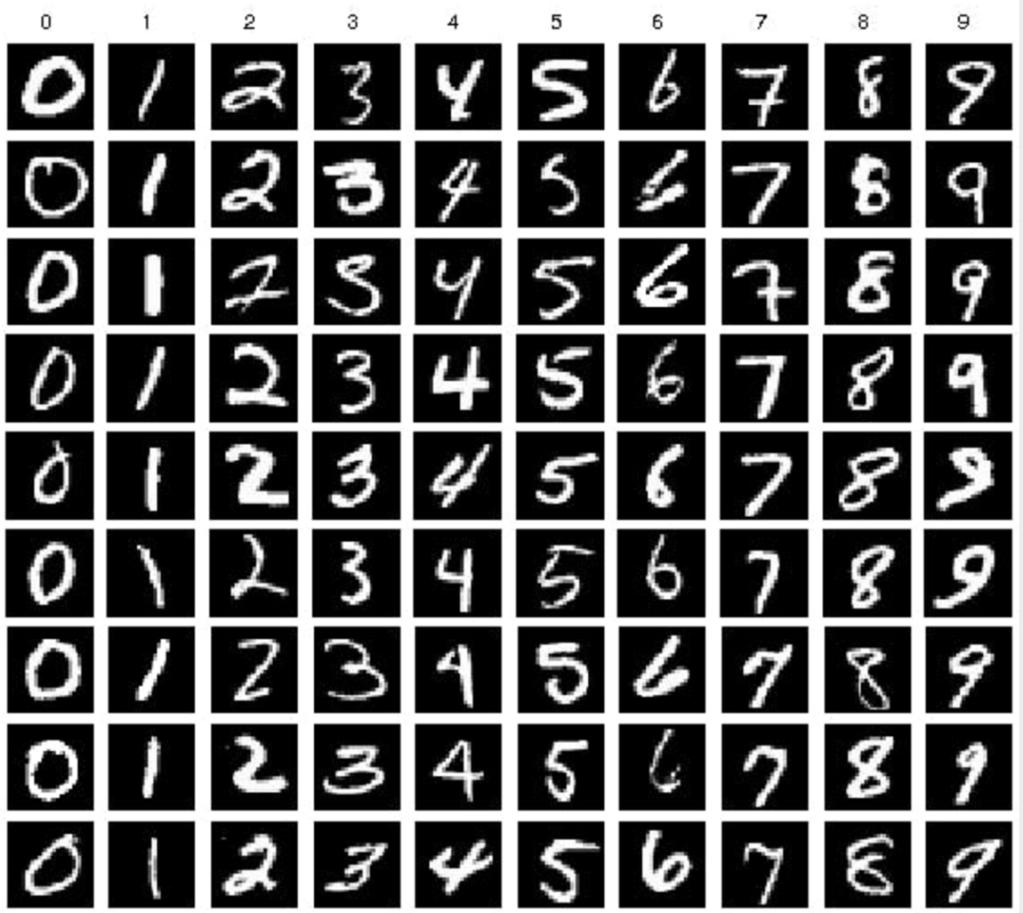
LeCun had joined Bell Labs the same year I did, coming from a post-doc with Geoff Hinton at Toronto where he had studied neural networks. At Bell Labs, LeCun developed the convolutional neural network (CNN) to replace the fully connected layers of neurons that had routinely been used in previous networks. The CNN, by using expanding fields of attention, required far fewer neural weights to train. That year, the Bell Labs team tried out the new neural network architecture on scans of thousands of handwritten numbers provided by the US Postal Service from their facility in Buffalo, NY. LeCun went on to become one of the leading figures in the AI revolution.
World Wide Web (1989)
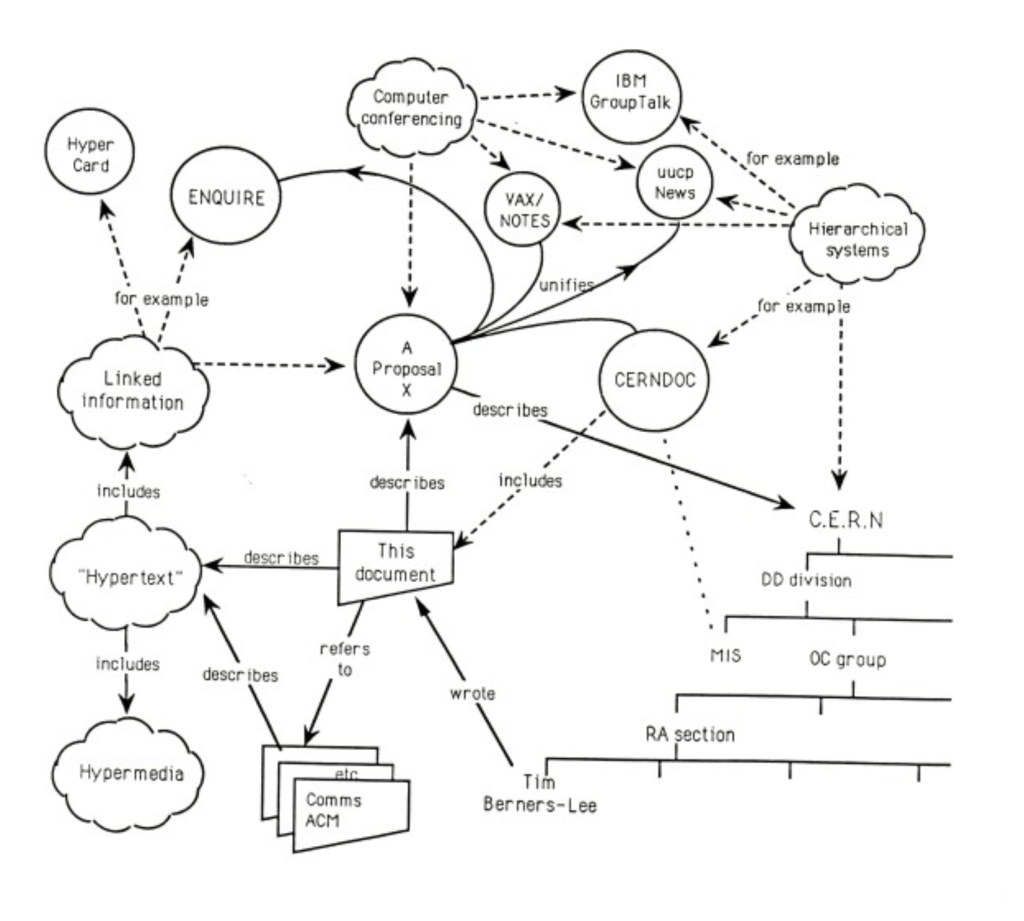
The World Wide Web was invented by English computer scientist Tim Berners-Lee in March 1989 while working at CERN (the European Organization for Nuclear Research). Five years later, in a faculty meeting in the Physics Department at Purdue University, I was introduced to this new thing called the “World Wide Web” by an Physics IT staff. They told us we would need to learn how to use it because it would change how we did our jobs. None of us believed him—but teaching at the university today is almost unrecognizable to what it was in the early 90’s. And the same with daily life. The WWW changed everything from how we shop to how we read to how we communicate. It is the information conduit of the Information Age.
Epilog
The Information Age proper began 80 years ago (although information has been with us since the start of the universe in the Big Bang). This short history has covered the first 40 years, so only about half of the period. Since 1989, the inventions of the first 40 years have matured and evolved, but are still mostly recognizable. Cell phones are still cell phones, just smaller and smarter. The internet now consumes our attention, but it uses the same hypertext technology as the first network at CERN.
But one thing has evolved that is about to remake human society—AI. It likely will change life in such radical ways that it will mark a discontinuity in human history. Born of the Information Age, AI may close that door and usher in a new Cognitive Age. How humans will participate in the new Age is an open question.

